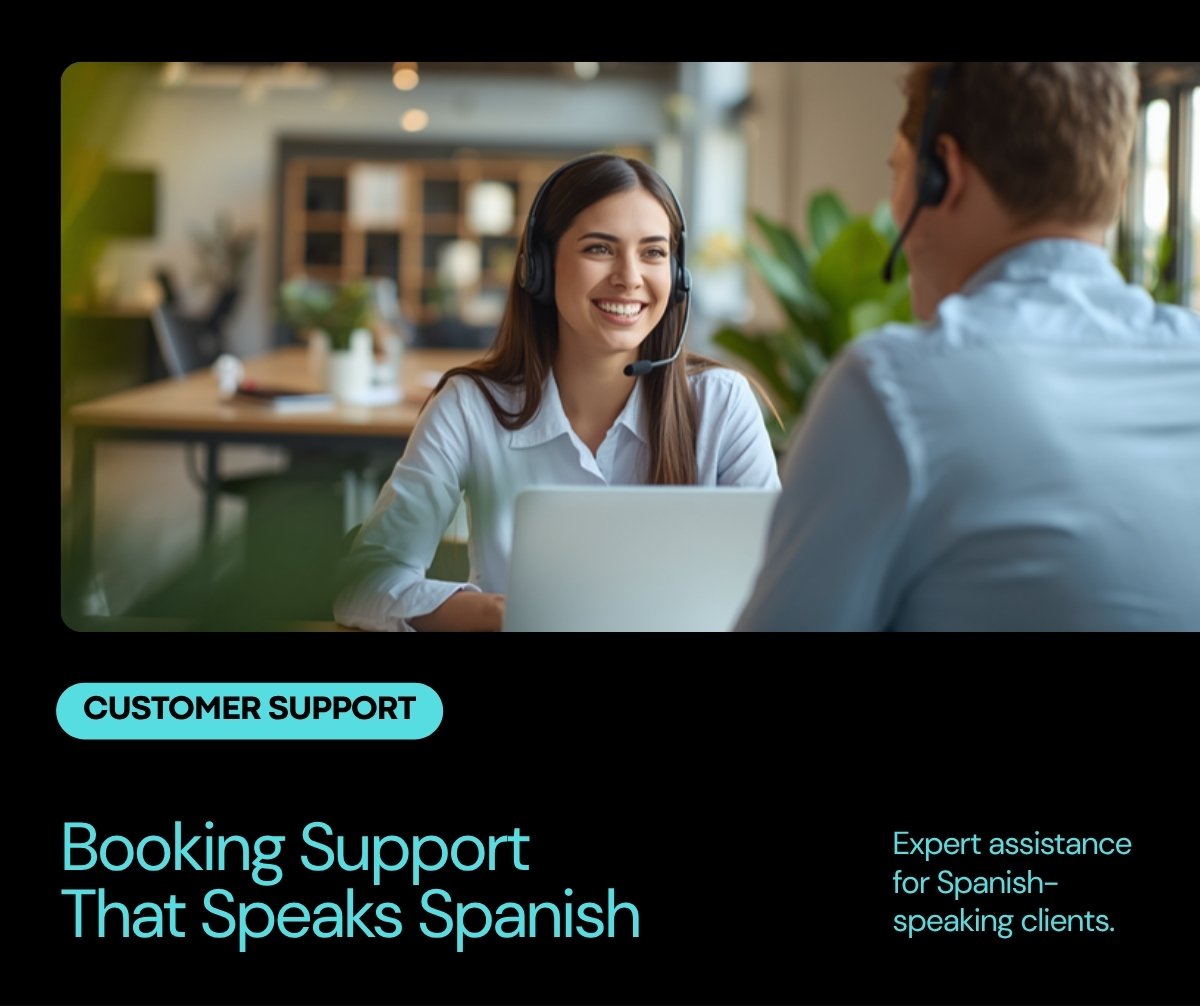
Most booking systems on the market were built with English as the primary language, and Spanish (or any other language) gets added afterwards, as a layer on top. It shows. And for a Spanish-speaking business, or one selling to Spanish-speaking customers, that layer falling short costs real money.
A translated menu is not the same as a translated business
Almost any platform lets you switch the menu language. But that's only the part the business owner sees. What really matters is what your customer sees: the booking confirmation email, the 24-hour reminder, the page where they enter their payment details. If all of that still arrives in English, your Spanish-speaking customer feels like they booked on someone else's website.
Technical support: the most common blind spot
When something breaks — a calendar that won't load, a duplicate booking, a question about a charge — you need to explain it clearly and be understood the first time. Doing that in your second language, in a chat with someone on the other side of the world, adds friction at exactly the worst moment: when you already have a problem and customers waiting.
Multi-currency isn't the same as multi-language, but they go hand in hand
If you sell to tourists or customers across different Spanish-speaking countries, your system should be able to charge in euros, dollars, or the customer's local currency without you doing manual conversions or explaining why the price "doesn't add up". A system genuinely built for the Spanish-speaking market usually handles this natively, not as an afterthought.
Why this directly affects your bookings
A customer who doesn't fully understand a step in the booking process — or who receives a confirmation in a language they're not fully comfortable with — loses trust. And at the moment of payment, that lost trust turns into abandoned carts and bookings that never get completed. This isn't a language detail: it's a conversion problem.
What to ask before deciding
- Does the confirmation email actually arrive in the customer's language, or just the "book now" button?
- Who responds if there's a problem, and in what language?
- Can I charge in my customer's currency without doing the math by hand?
- Does the team behind the platform actually understand how a tourism business works in Spain or Latin America, or do they just translate text?
At TurIA we built the platform with Spanish-speaking businesses in mind from day one: calendar, emails, reminders and support, all genuinely available in Spanish — plus English, French, Italian or Portuguese as your customers need, with each market's real currencies. If you want to see it for yourself, you can try the interactive demo without signing up.